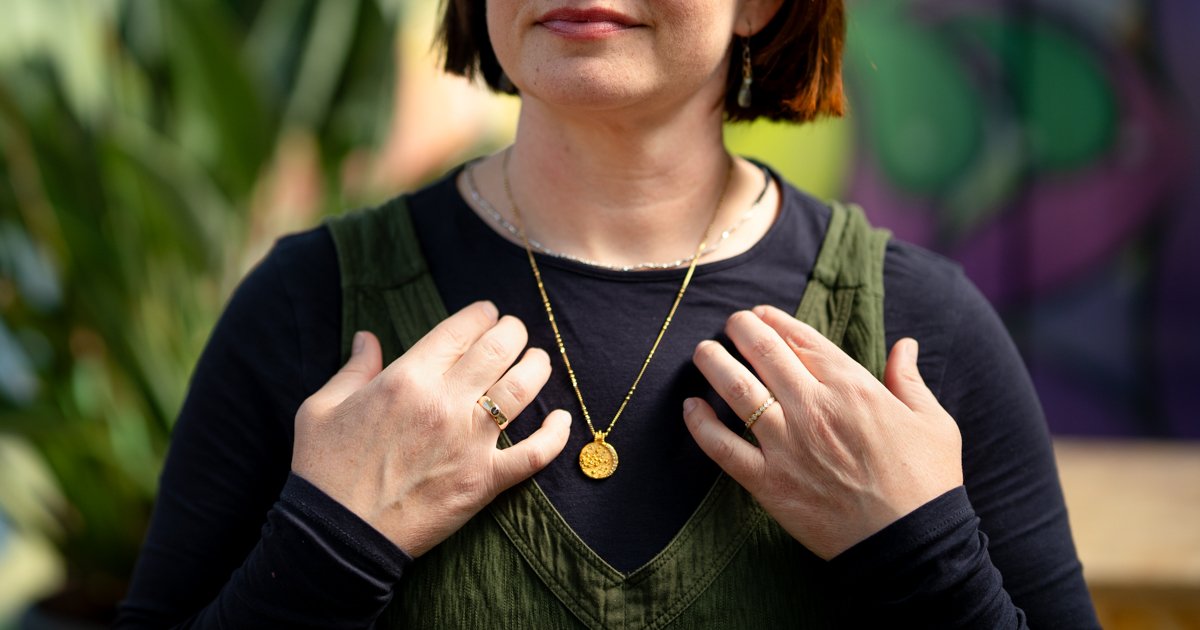
What Happens In An EFT Tapping Session
EFT practitioner April Dautlich shares exactly what to expect from a tapping session, why it works, and why so many people leave saying it was nothing like they imagined.
I have lost count of the number of people who arrive at their first EFT session braced for something uncomfortable, and leave surprised by how straightforward it felt.
That gap between what people imagine and what they actually experience is one of the reasons I wanted to write this. EFT tapping sits at the edges of what most of us have been taught to expect from a therapy or wellbeing session, and that unfamiliarity can be enough to put people off trying something that could genuinely change things for them.
So here is what actually happens.
The session itself
EFT combines conversation with tapping on specific acupressure points on your own face, hands and upper body. You stay fully present and in control throughout. Nothing is done to you. You simply follow my lead, repeat the words I say, and notice what shifts. The words are completely yours and are created from our conversation.
Your first session is 90 minutes. We start by talking through what has brought you to EFT and what you most want to change. You do not need to have it perfectly articulated. Most people do not. We find the thread together.
I will show you the tapping points before we begin. There is nothing to memorise. You follow along, and we adjust as we go based on what comes up for you.
From there, we move into the tapping rounds themselves, pausing between each one to check in on what has shifted and where to go next. Many people notice physical changes during this process. Yawning, sighing, a sense of things lifting, unexpected clarity, or simply a feeling of calm that was not there when they arrived.
The response I hear most often at the end of a first session is: I feel so much calmer.
Follow-up sessions are 75 minutes. Sometimes we pick up where we left off. Sometimes life has moved on, and something else needs attention. I work flexibly because that is how real change actually happens.
Why it works
Here is the part that surprises most people.
EFT is not about talking yourself into feeling better. It works because tapping directly interrupts the stress response in the body. When you hold a difficult thought or feeling in mind while tapping, your nervous system begins to settle around it. Research has shown that tapping can reduce cortisol, the body's primary stress hormone, by up to 42%.
That is not a mindset shift. That is your body changing its response at a physiological level.
This is also why EFT can work when other approaches have not. It is not asking you to think differently before you feel differently. It works the other way around.
What EFT is not
EFT is not hypnosis. It is not NLP. It is not positive affirmations dressed up in a fancy costume.
And it is not a one-session wonder, though I want to be honest about why. The things that bring most people to EFT have usually been present for a long time. I work with clients on an ongoing basis, similar to how you might work with a therapist week to week, because lasting change is built in layers. The difference is that people often notice real shifts much sooner than they expect.
What EFT can help with
Anxiety and overwhelm. Burnout. Self-worth. People pleasing. Parenting stress. Life transitions. Sleep. Financial stress patterns. Creativity blocks. Recurring emotional triggers that you cannot seem to shake, no matter how much you understand them intellectually.
If any of that sounds familiar, it is worth having a conversation.
How to work with me
I work with clients online wherever they are and in person at Wellness34 in Hurstpierpoint, just outside of Brighton, as well as at The Clinic at Borde Hill in Haywards Heath, Sussex. You can find out more and book a free discovery call here. If you have been wondering whether EFT might be right for you, that call is the place to start.