Emotional Freedom Technique is a science-backed therapeutic tool that combines gentle tapping on acupressure points while focusing on a problem or emotion. It is a simple yet effective method to calm the nervous system, reduce stress and allow your body to feel safe.
You have found the one-stop page for the absolute basics of EFT tapping, known in full as Emotional Freedom Technique.
If you have heard about tapping and want to understand how it works or how to begin, this page will walk you through the essentials. Think of it as a quick guide to help you get started.
What is EFT Tapping?
EFT is a method of gently tapping on specific acupressure points on your own body while talking about a problem you are working on. Sounds simple, right? It really is as simple as it sounds!
But simple does not mean ineffective. In fact, the simplicity of EFT is part of what makes it so powerful.
In short, EFT combines elements of talk therapy while activating specific acupressure points on your head and torso. This process helps calm the nervous system, release emotional blocks, and reduce the intensity of triggers.
EFT can be used with a practitioner who guides you through the process, similar to a therapy session. It can also be used on your own as a daily tool to calm stress, process emotions, and support your wellbeing in the moment.
What Does the Research Say?
EFT has been the subject of a growing body of research over the past couple of decades. Studies have shown that tapping can help reduce stress, anxiety, and symptoms of trauma while also lowering cortisol, the body’s primary stress hormone.
Many believe that the combination of focused attention and stimulation of acupressure points helps regulate the nervous system.
If you would like to explore the research in more depth, you can read more about the science behind EFT tapping here.
Why Do People Use EFT?
Tapping can be used for a wide range of emotional and physical experiences. Not because it is a blanket solution, but because many different issues involve stress responses in the body and nervous system.
People commonly use EFT for:
Stress
Anxiety
Overwhelm and procrastination
Negative thoughts
Physical pain and discomfort
Sleep challenges
Weight loss and cravings
Relationship challenges
Limiting beliefs
Work-related issues such as productivity, leadership, or public speaking
Life purpose questions and deeper emotional exploration
Many people begin using tapping for one specific issue and then realise it becomes a helpful tool for many areas of life.
EFT Tapping Points
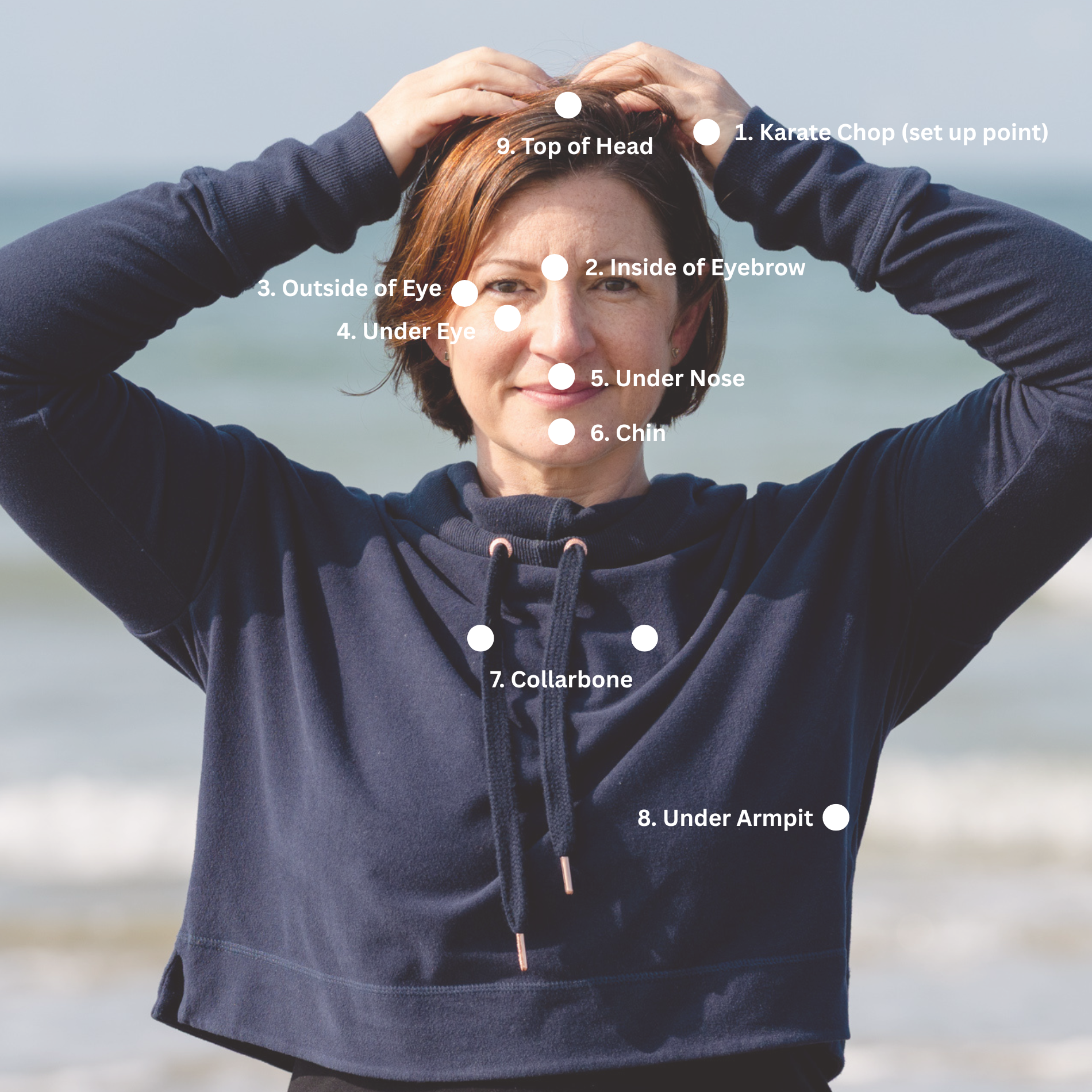
There are several tapping points used in EFT that correspond with acupuncture points on the body.
Different practitioners or training schools may use slightly different sequences or include additional points. The following nine points are used in almost all EFT approaches and are a great place to begin.
Karate Chop point on the side of the hand
Inside of eyebrow
Outside of eye
Under eye
Under Nose
Chin
Collarbone
Under armpit
Top of head
Tapping is a gentle touch. Tapping harder does not make the process work faster. A light rhythmic tap is perfect. Most people tap around seven times on each point before moving to the next.
The Simple Tapping Process
Step 1
Tune into an issue that feels emotionally activating. This might be stress, worry, frustration, or a specific situation that is bothering you.
Step 2
Notice how intense the feeling is on a scale from 0 to 10, where 10 is the strongest intensity.
Step 3
Begin tapping on the karate chop point on the side of your hand while saying a setup statement that acknowledges the problem.
For example
Even though I feel anxious about this situation, I accept how I feel.
Even though this stress is really present right now, I allow myself to relax.
Step 4
Move through the tapping points while repeating short reminder phrases that keep your attention on the issue.
Examples might be
This anxiety
This pressure in my chest
All this stress about the meeting
Step 5
After one round of tapping through the points, pause and check the intensity again from 0 to 10.
Often, the number begins to decrease after a few rounds. You can continue tapping until the emotional charge begins to settle.
How Long Does EFT Take To Work?
One round of tapping through all the points usually takes about one minute. Many people notice a shift in how they feel after just a few rounds.
For everyday stress or emotional triggers, tapping for ten minutes can often bring noticeable relief.
More complex issues may take longer and are often easier to work through with the support of a practitioner.
Can You Do EFT on Yourself?
Absolutely. EFT is designed to be both a self-help tool and a practitioner-guided method. In fact, I often have my weekly clients do short daily taps between our sessions.
You can use tapping anytime you notice stress, frustration, anxiety, or emotional discomfort. Even a few minutes of tapping can help your nervous system settle and create more space to think clearly.
Working with a practitioner can help uncover deeper patterns and guide you through more complex emotional layers.
What If I Don’t Know What to Say While Tapping?
This can often be the biggest hurdle to getting started. The goal is simply to acknowledge what you are feeling in the moment.
You might start with phrases such as
This stress I am feeling
This frustration about today
This tight feeling in my chest
Being honest about the emotion you’re feeling or the physical sensations works better than trying to force a script you found.
If new thoughts or feelings arise while tapping, bring them in and give them some space to be acknowledged, too.
I’ve created a workbook to help guide you in making scripts for yourself. Get that here.
When Should I Work With a Practitioner?
Tapping on your own can be very effective for everyday stress and emotional regulation.
Working with a practitioner can be helpful when you want support with deeper issues such as recurring patterns, long held beliefs, or past experiences that still carry emotional intensity.
A practitioner can guide the process, ask the right questions, and help connect the dots to what is really driving a reaction.
If you’re feeling curious about a session, you can book a discovery call here.
